“So, did they all quit? Or die?”
That’s what I was asking the HR department. Surely there had been other employees who had battled cancer in my company’s illustrious history? To this day—20 years later—I can only believe I was the first who lived to tell.
The week I returned to work from my double mastectomy—after a month and a half of pain, fear, trauma, healing—I was called into a meeting with my manager and two other managers; witnesses. It was time for my semi-annual review. Before the door even closed, they reduced my salary by 10% for non-performance.
Go ahead. Read that again. Throw a few 🤯 emojis while you’re at it.
I was on FMLA, meaning I was not getting paid while out for surgery. That’s how FMLA works. My job was held ’til I got back. That’s also how it works.
And then my very meager salary was reduced by 10%. Apparently that’s how it worked at my company.
Worse, the pattern was due to repeat itself every six months. I saw it coming almost the minute I saw my tumor on the ultrasound. I worked for a huge local employer that viewed me as nothing but an entry-level producer.
If I wasn’t producing, I was dead weight.
Maybe literally.
Months earlier, as soon as I got my diagnosis, I had reached out to the HR department for guidance. Expressing my concern that, based on our salary structure, I was going to be losing money each review cycle, I asked how HR could help circumvent “an echo effect that will likely reverberate for the next 18 months to two years.”
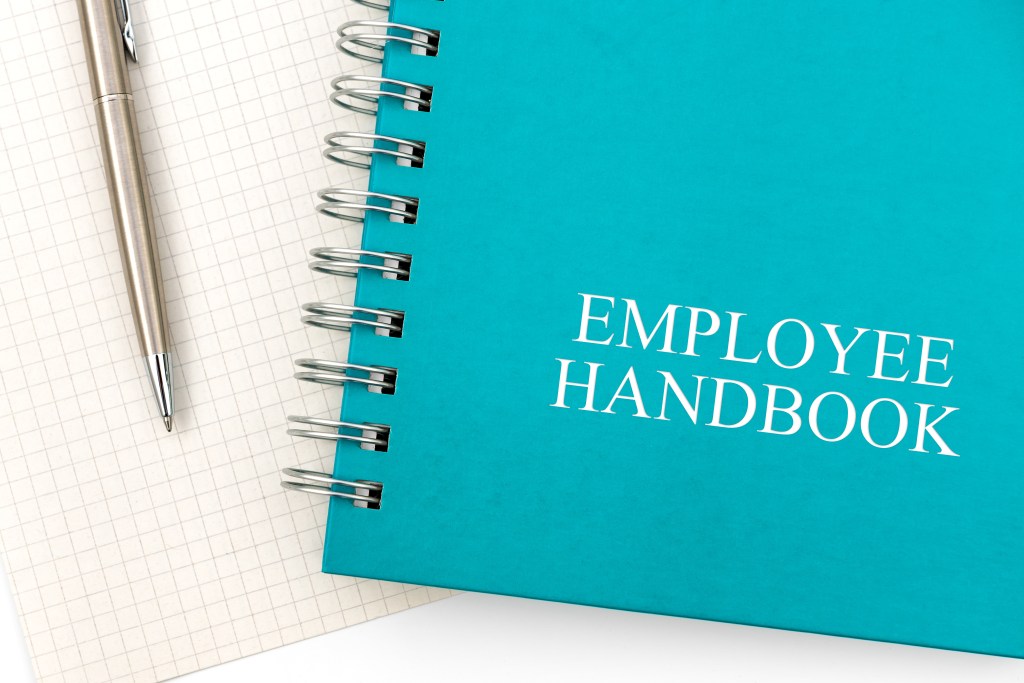
Their response: “Please refer to page 54 of our employee handbook.”
And because I was such a “poor performer,” I was handcuffed to my manager, unable to transfer to any other department where intermittent absences for surgeries and treatment would be easier on me and the company. Unable to dream past my cubicle.
That’s on page 55.
I needed alternatives, and there didn’t seem to be any. I couldn’t afford to quit or die. I had a son. And a life that was just restarting here in the desert. I was being blackballed by the very company that was helping keep me alive. I needed that insurance and a paycheck.
And so I went back to work with my reduced pay and waited for my scars to heal enough to start chemo—knowing that facing chemotherapy, illness and brain fog for most of the second half of the year would lead straight back to another poor performance review.
Page 56: Call the feds
My next step was an appointment with the Equal Employment Opportunity Commission (EEOC). I had to wait a long time—there were a lot of disgruntled workers that day. I remember it well because I was bald and freezing in the AC.
But it was worth the wait. My rep was appalled by my story, and we quickly decided to file a request for mediation.
My employer rejected it. Which pretty much meant “I’m the biggest employer in the city, and you can suck it—go ahead and sue us.”
Right. The single, barely employed breast cancer patient was going to pursue a labor lawsuit?
But wait, there’s more. Because when jobs opened up that I knew I could do very, very well — where the pay wasn’t based on “production,” and there would be opportunity to work from home — I was stuck, branded as a bad employee.
Client No. 1
Luckily for me, something was happening behind the scenes that summer. I can only imagine that other employees of this major company were having HR/workplace complaints, too, because an ombuds office was set up—independent of the institution—for problem-solving, whistleblowing and conflict resolution.
Coworkers from across the building sent me the notice. They knew what I was going through.
I might’ve been Client No. 1 when I went into the ombuds office and asked for help with my EEOC claim. What a relief! For once, someone was willing to listen to what I had been going through.
The ombudsperson quickly saw my conundrum. With her help, an in-house resolution became a no-brainer. I needed to stay employed and insured. To do that, all I really wanted was to be liberated from the call center—to become a better employee by having the opportunity to apply for other jobs I was better qualified for.
She couldn’t promise me a job. I didn’t care. I knew I’d get it. When I did, I agreed to a straight-across salary transition—no raise to meet my new department’s pay scale. That was our deal.
And an NDA. 🤫
I did it for survival.
I stayed in that new department for 8 years. Turns out there are many ways to be a cancer survivor.





Leave a comment